Construction Photo Evidence for Payment Applications and Final Accounts
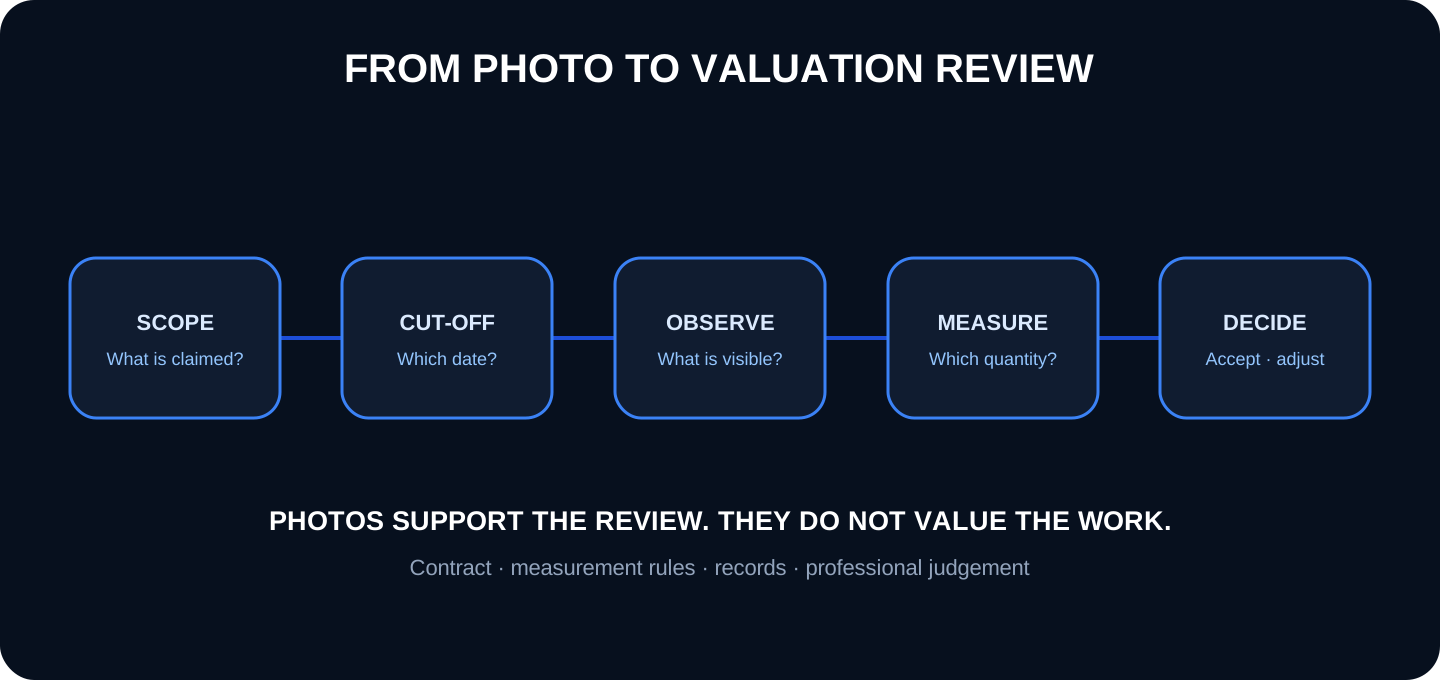
A team can use the photos it already takes to prepare a clearer review: gather the relevant period, locate each selection, compare it with the previous valuation date, and link it to work items and measurements. The aim is not to certify from an image, but to reduce uncertainty and make discrepancies visible.
1. The problem that visual registration solves
In many reviews, photos arrive as massive attachments, files with automatic names, or isolated messages. The reviewer must find out which area, date and game each image corresponds to. Localized registration reduces this previous work and allows the meeting to focus on real discrepancies.
It does not eliminate the visit or the measurement. Avoid starting the conversation with “where is this?” and helps recover what was seen in the previous cut.
2. Minimum model by selection
Block
Data
Identity
Project, period, cut, author, capture date
Location
Building, floor, area, axis, plan reference
Scope
Item, package, change or milestone
State
Not started, partial, visible finished, not observable
Medium
Measurement, part, test, inspection, blueprint
Decision
Observed, adjusted, pending, responsible, date
This model separates the photo from the evaluation: the image shows a state; other records justify quantity, quality and contractual right.
3. Periodic capture by control points
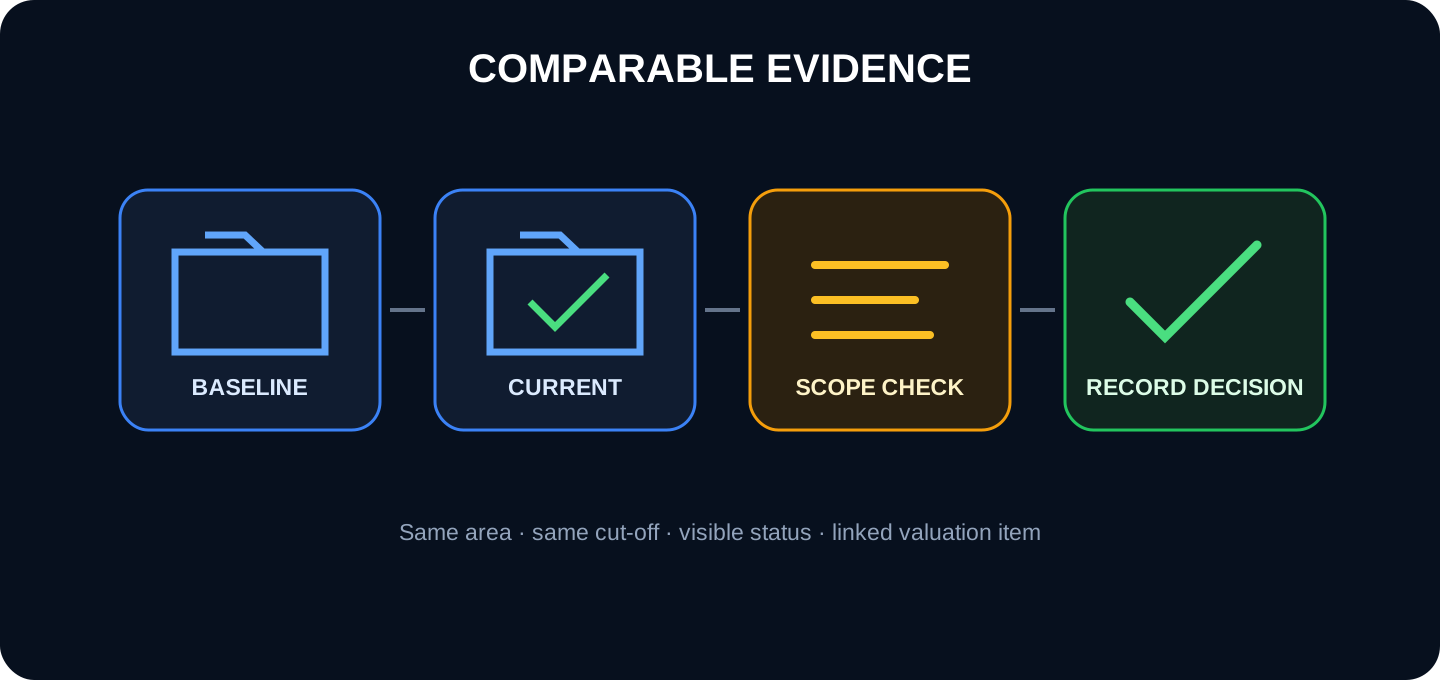
Define repeatable points per front, floor or system. Record the same location on each cut and add specific shots of jobs performed since the last review. Coverage must be proportionate and not limited to finished areas.
A comparable reference reduces interpretations; scope checking is still necessary.
For work that will be hidden, capture it before closing and relate it to inspections or tests. Keep the original, especially if copies will be circulated in chat or reports.
4. Prepare the assessment meeting
Set the cut and gather the previous certification.
Filter photos from the period by area and author.
Recovers the previous reference of the critical points.
Group by item and link measurements or plans.
Mark what is not observable, doubtful or out of date.
Prepare only images that help a question or decision.
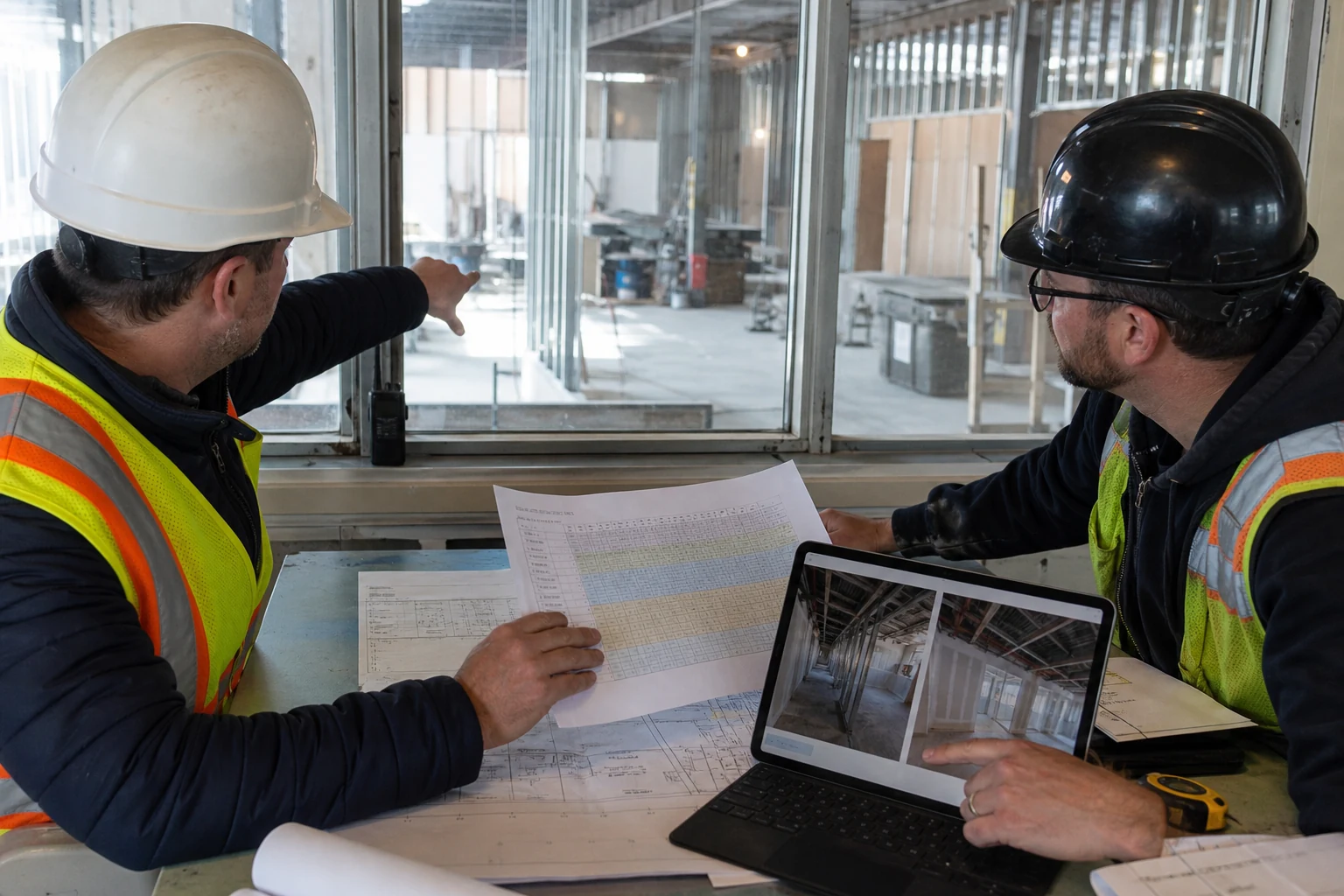
Editorial photography generated by AI. A meeting gains effectiveness when each image arrives linked to cut, zone and scope.
5. Resolve discrepancies with a common matrix
If a link is missing, record what information should be provided instead of forcing a conclusion.
Classify each difference: questionable location, incorrect cut, unidentified scope, pending quantity, pending quality, unformalized change, or unobservable work. Thus the following action is concrete.
RICS recommends maintaining photographic records in the valuation documentation and retaining adjustments to the application. The value is not in “winning” an argument with an image, but in reconstructing a coherent decision.
6. Prepare final certification and settlement
Liquidation requires distinguishing work performed, repairs, auctions, changes, reserves and pending documentation. Gather closing sequences, not just final photos. If a game was hidden, link previous captures and associated controls.
Preserve exports with metadata and an understandable structure. An expiring platform account is not a delivery. Defines the contractual format and custody.
7. Distribution of responsibilities
Field: Consistent capture, location and loading within the period.
Production: relationship with departure, progress and changes.
Measurements or costs: quantities, rules, cut and proposal.
Address or reviewer: verification, reservations and decision.
Document control: versions, access, conservation and delivery.
A platform should not erase this separation: whoever takes the photo does not necessarily measure or authorize payment.
8. Flow with Pic on Site
1. Centralize
Gather originals from those responsible for each front.
2. Locate
Check map or plan; complete floor and area when the GPS is not reliable.
3. Recover
Filter by cut and zone, and visually search for related elements.
4. Select
Prepare a brief collection with departure, measurement and review question.
The decision, amount and approval must be recorded in the defined contractual or economic system.
9. How to evaluate if the flow provides value
Time to prepare and review the selection.
Percentage of images with verifiable location and cut.
Games discussed due to lack of context.
Hidden jobs without evidence prior to closing.
Discrepancies closed with person responsible and date.
Preparation time for final delivery.
Don't just measure how many photos are uploaded. High volume can increase work if images do not respond to specific queries.
10. Flow limits
Photography does not automatically measure, does not confirm hidden quality, does not prove that all scope is included, does not replace trials, and does not determine contractual rights. Nor should it be used to present something as executed outside the court date.
Pic on Site limit: organizes and helps recover visual evidence. It does not calculate measurements, amounts or percentages, it does not certify and it does not replace the competent reviewer.
11. Frequently asked questions
What is it really for?
To better prepare for the review, locate visible status and reduce search time.
Can an after photo be used?
It may clarify, but it must be identified as later and not substitute evidence of the cut.
Is one folder enough?
It may be enough if it maintains court, zone, game, responsible parties, versions and decisions in a stable manner.
Does Pic on Site pass certification?
No. Approval belongs to the contractual process and designated roles.